Metana Display Font for Handmade Creators
If you’ve ever spent hours tweaking a label, reworking an invitation layout, or second-guessing whether your sticker font reads clearly at 0.5 inches — you know how much weight the right display font carries. Metana isn’t just another decorative typeface. It’s a thoughtfully crafted display font built for makers who need beauty *and* function — especially when that beauty has to survive a Cricut blade, hold up on a matte-finish candle jar, or charm customers scrolling through Etsy listings.
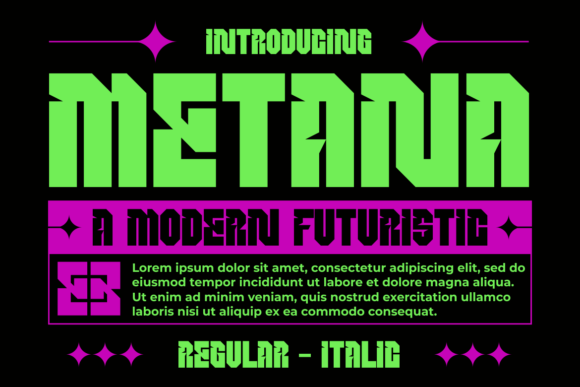
Visually, Metana balances modern elegance with grounded warmth. Its letterforms have subtle contrast, soft curves, and confident proportions — not overly ornate, never fragile. There’s a quiet confidence in its rhythm: uppercase letters stand tall and memorable, while lowercase characters flow with just enough personality to feel hand-informed, yet remain consistently legible. It’s the kind of display font that looks intentional at 48pt on a wedding welcome board *and* holds its own at 14pt on a boutique clothing tag.
For physical product creators, readability is non-negotiable — and Metana delivers where it counts. Its open counters (the enclosed spaces inside letters like a, e, and o) stay clear even when cut from vinyl or printed at small sizes. I’ve used it successfully on 3/4-inch round stickers for bath bomb labels, and it stayed crisp and friendly — no blurry edges, no lost details. On kraft paper tags? It adds instant sophistication without looking stiff. And because it’s designed as a true display font — not a condensed script or ultra-thin serif — it avoids the common pitfalls of poor cut-line definition or ink bleed on uncoated stock.
Think about where you use bold, expressive typography most: farmhouse-style wall art, seasonal greeting cards, printable planner headers, boutique packaging, SVG-cut signs for craft fairs, or even heat-transfer designs for mugs and tote bags. Metana shines in all of these. A birthday invitation set gains cohesion when the child’s name is set in Metana — distinctive but not distracting. Wedding stationery feels elevated without being formal; the font’s gentle curves echo handwritten warmth, while its structure keeps everything polished. For holiday product lines, try pairing Metana with a clean sans serif for “Limited Edition” subtext — the contrast gives hierarchy without competing.
It’s also ideal for digital printables meant to be downloaded, printed, and assembled by customers. Because Metana avoids excessive flourishes or tight spacing, it scales well across home printers and maintains clarity on both laser and inkjet output. I’ve embedded it into editable Canva templates and PDF planners, and users consistently comment on how “easy it is to read” — a rare compliment for a display font.
Pairing Metana thoughtfully makes all the difference. When designing product bundles or layered SVG files, I often pair it with a relaxed handwritten font for quotes or short phrases — think “Hand-poured • Small Batch” — letting Metana anchor the main headline. For packaging labels or shop branding, I’ll combine it with a neutral sans serif (like Montserrat or Poppins) for ingredients, care instructions, or sizing charts. The contrast works because Metana doesn’t shout — it invites attention with grace, then steps back so supporting text can do its job.
You’ll want to explore what’s included with Metana — especially if you’re building reusable design assets. Look for alternate characters, stylistic ligatures, and swash options (if available). These aren’t just decorative extras: a single elegant swash on the capital “M” can become your signature touch on business cards or social media banners. Check whether it supports extended Latin characters — important if you sell internationally or create bilingual printables. And confirm file formats: OTF and TTF are essential for compatibility with Silhouette Studio, Cricut Design Space, Adobe Creative Cloud, and Canva.
Licensing matters — especially when your work ends up on physical goods or digital downloads. Make sure your Metana license explicitly covers commercial use: selling printed invitations, SVG files for cutting machines, editable templates, merchandise (like shirts or mugs), and client projects. Most reputable display fonts include a clear commercial license, but always double-check before listing your first product. A solid license means you can confidently build your brand around Metana — using it across your shop banner, product photos, packaging, and downloadable assets — knowing you’re covered from concept to customer delivery.
One practical note: test Metana early in your workflow. Import it into your cutting software and run a 1-inch test cut on scrap vinyl. Zoom in on your screen preview — does spacing feel balanced? Does the lowercase “g” or “y” retain shape at tiny sizes? If you’re designing for print-on-demand services, upload a mockup with Metana at actual size and view it on mobile. What looks stunning at desktop scale sometimes loses impact in the palm of a hand — and Metana’s thoughtful design helps avoid that drop-off.
Whether you’re launching your first Etsy shop or refining a decade-old craft brand, typography is one of your quietest, strongest brand signals. Customers don’t read your font name — but they *feel* its tone. With Metana, that feeling is approachable, intentional, and quietly confident. It says “handmade with care” without saying a word — and that kind of resonance sells more than aesthetics alone.
So next time you’re choosing a display font for your next batch of greeting cards, candle labels, or printable wall art — choose one that works as hard as you do. Choose Metana.